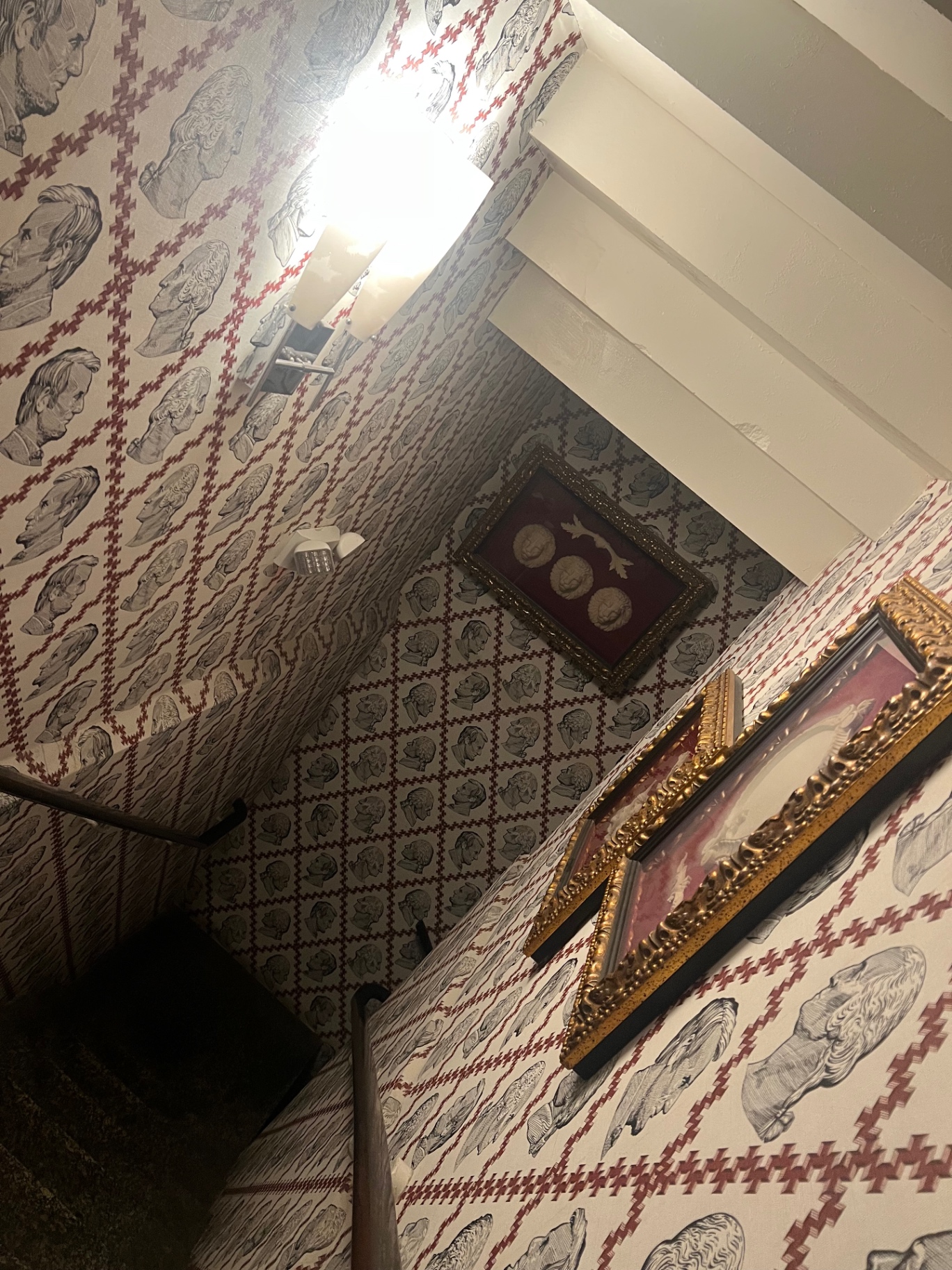
Where we're staying
Kimpton Hotel Monaco
The Old General Post Office · Washington, D.C. · est. 1842
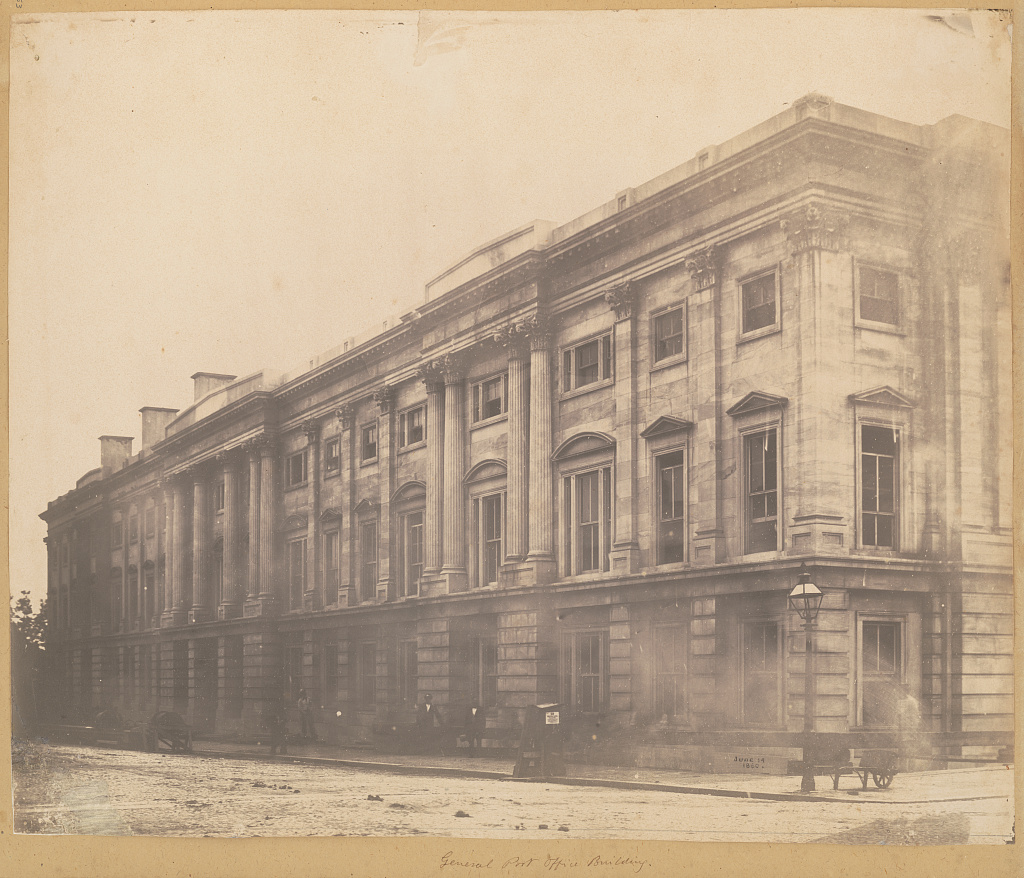
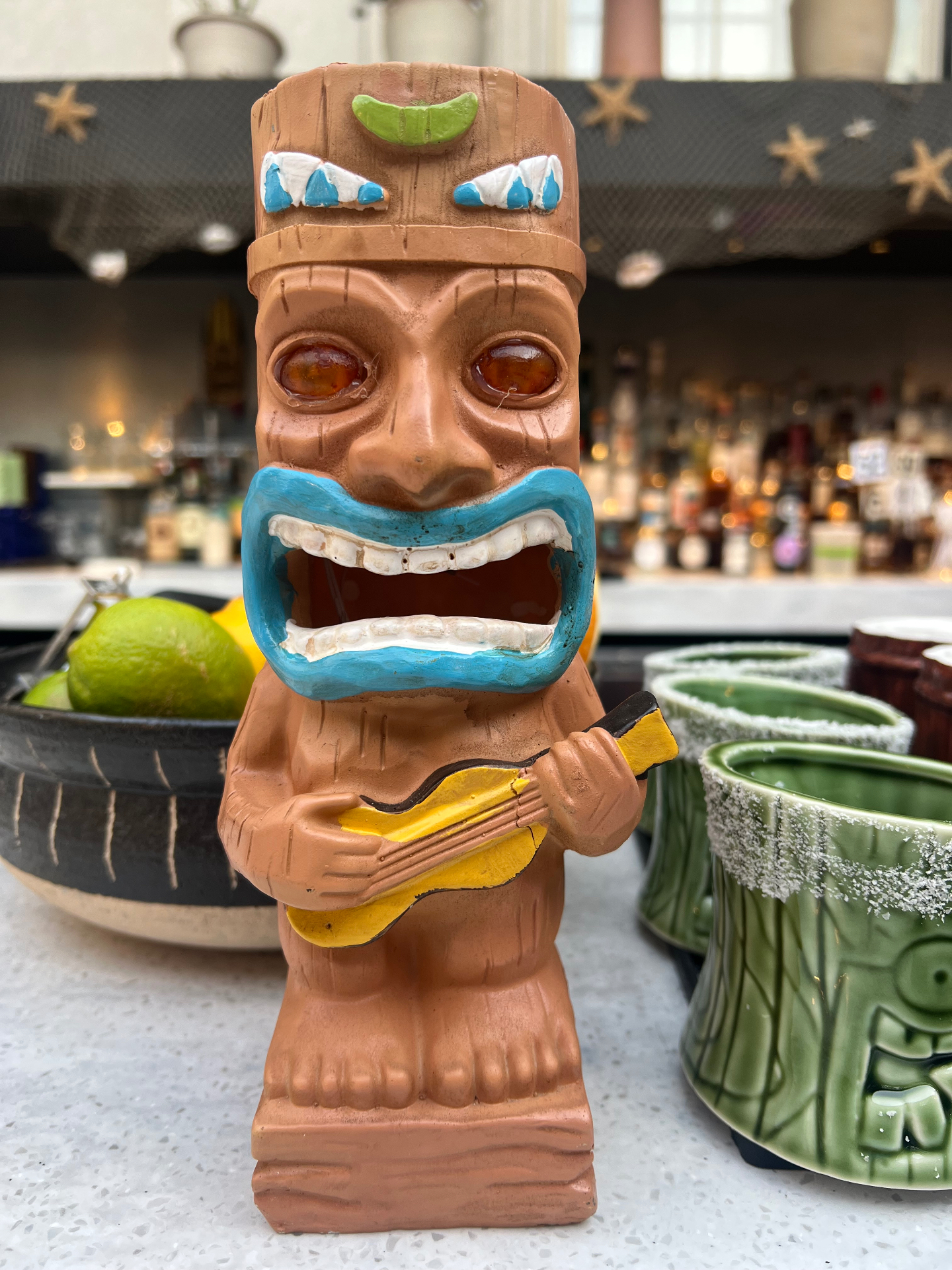
Behind the tiki drinks and the leopard-print robes, the Kimpton Hotel Monaco occupies one of the most important buildings in the capital: the old General Post Office at 700 F Street NW, a marble temple that has stood in the heart of Penn Quarter for nearly two centuries and is today a National Historic Landmark.
It fills the full block bounded by 7th, 8th, E, and F Streets — a footprint of roughly 204 by 280 feet built around an interior courtyard — and is also remembered under its later government name, the Tariff Commission Building.
Fire, and a fresh start
The site's first tenant was Blodgett's Hotel, the largest privately owned building in early Washington, designed by James Hoban — the same architect who drew the White House. The government bought it in 1810 to house the Post Office and Patent Office, and after the British burned the city in 1814 it was one of the few public structures left standing — Superintendent of the Patent Office William Thornton talked the officers out of torching it. With the Capitol in ruins, Congress convened inside the hotel from September 1814 until December 1815. A fireplace accident on December 15, 1836 finally destroyed it, taking thousands of patent models and records with it, and clearing the way for the fireproof building that stands today.
Robert Mills and a marble palazzo
President Andrew Jackson turned to Robert Mills — the architect of the Washington Monument, the Treasury Building, and the Patent Office across the street — to design the replacement. Completed in 1842, Mills' General Post Office was the first all-marble building in Washington: a restrained, finely detailed Renaissance palazzo in gleaming white marble, a tour de force of American neoclassical civil architecture — and the first use of the Italianate palazzo style for a major public building in America. Mills regarded it as his masterpiece, and many agreed: an 1859 article in Harper's doubted whether any building in the world was more architecturally perfect. Because the 1836 fire was fresh in memory, he built it fireproof, with true brick masonry vaulting learned under Latrobe — groined corridors, plaster friezes, and two domed alcoves sheltering marble spiral stairways with wrought-iron railings. In 1845 Samuel F. B. Morse opened the country's first public telegraph office inside its walls.
Thomas U. Walter completes the square
Between 1855 and 1866, architect Thomas U. Walter — best known for the cast-iron dome of the U.S. Capitol — extended the building along F Street, closing it into a full rectangle around an interior courtyard. Rather than overpower Mills, Walter matched him: his new marble, quarried in Cockeysville, Maryland, blended so closely with the original Westchester stone that the two halves are nearly indistinguishable from the street. His addition also quietly pointed to the future — it is believed to use iron railroad rails as joists to carry its brick arches, an early ancestor of steel-frame construction. In 1856 sculptor Guido Butti carved the keystone of the west courtyard arch with an allegory of Fidelity, flanked by Electricity holding a lightning bolt and Steam holding a steam engine. Together Mills and Walter rank among the finest American architects of the 19th century, and this is one of the few buildings that carries the hand of both.
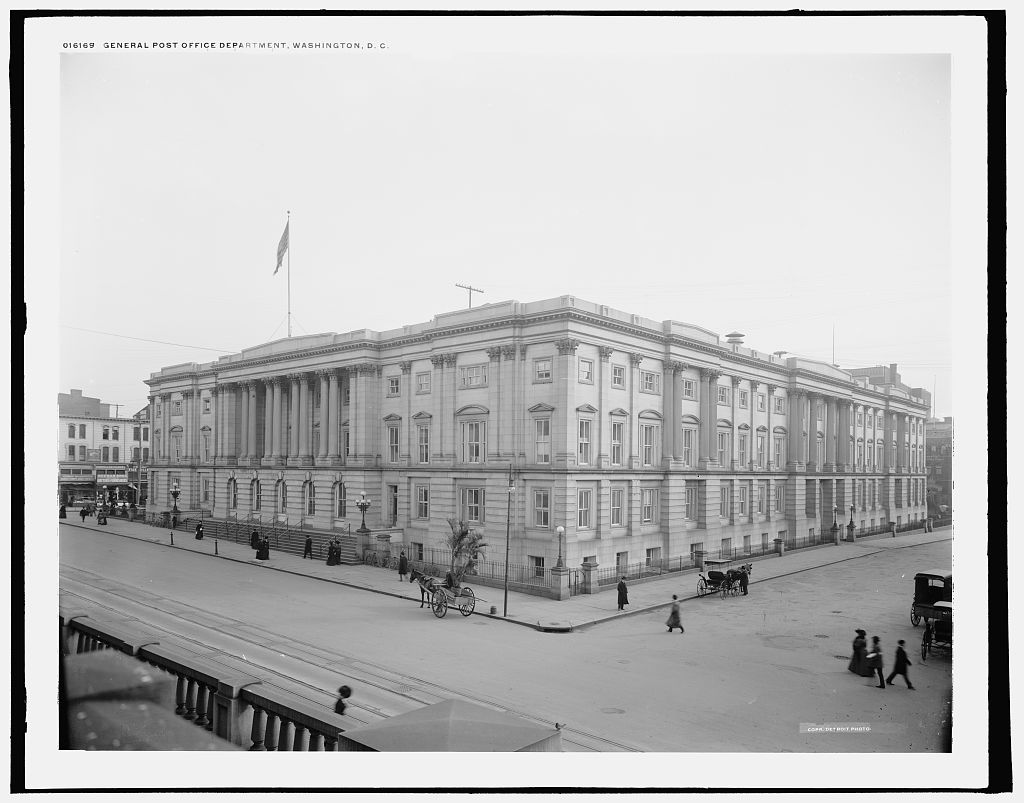
A long second act
Home mail delivery began here in 1863, with carriers coming and going through a horse-and-carriage entrance on 8th Street that still runs between the street and the restaurant courtyard today. Around 1873 the surrounding streets were graded down, leaving the ground floor above street level and permanently exposing the plain basement walls — which is why some hotel rooms today sit low, with high windows. The Post Office moved out in 1899, and the building passed through a parade of federal tenants: the General Land Office, the Bureau of Education, and from 1921 to 1997 the U.S. Tariff Commission (later the International Trade Commission), which gave the building its longtime alternate name.
Designated a National Historic Landmark in 1971, the building was revived by Kimpton beginning in 2000 under a 60-year GSA lease and a $32 million restoration — the main postal hall became the lobby and the mail-sorting pavilion became the restaurant. The Hotel Monaco opened in the summer of 2002, and the next year Condé Nast Traveler named it one of the world's eighty best new hotels. The work earned the D.C. Mayor's Award for Historic Preservation and two GSA Heritage Awards; in 2010 Pebblebrook Hotel Trust bought the property for $74 million.
What survives today
You can still read the building's history throughout the hotel. Mills' barrel-vaulted passageways survive on the south side, and two elegant spiral staircases with ornamental cast-iron balustrades remain in their domed, skylit alcoves. Remnants of postal operations linger — including the restaurant's mail-sorting pulley system — and guests can still mail postcards from the front desk. The Paris Ballroom, once the Postmaster General's library, keeps its soaring dome skylight, classical columns, and mirrored archways.
Tiki in a landmark
Kimpton has always leaned playful, and the Monaco is no exception — a tropical, tiki-tinged hospitality wrapped inside sober marble corridors and vaulted ceilings. The action centers on the courtyard bar, where music moves through the open-air space and sets the tone for the evening. Three distinct moods branch off from there: a proper dining room for a full meal, a sports-like bar for casual drinks, and the outdoor bar for fresh air under the sky. It's a fitting home base for a music night: a room built for records to breathe. Designated a National Historic Landmark in 1971, it remains one of Washington's great adaptive-reuse stories — a working hotel you can walk through like a museum.
700 F Street NW, Washington, D.C. · General Post Office (1839–1866), Robert Mills & Thomas U. Walter, architects.